
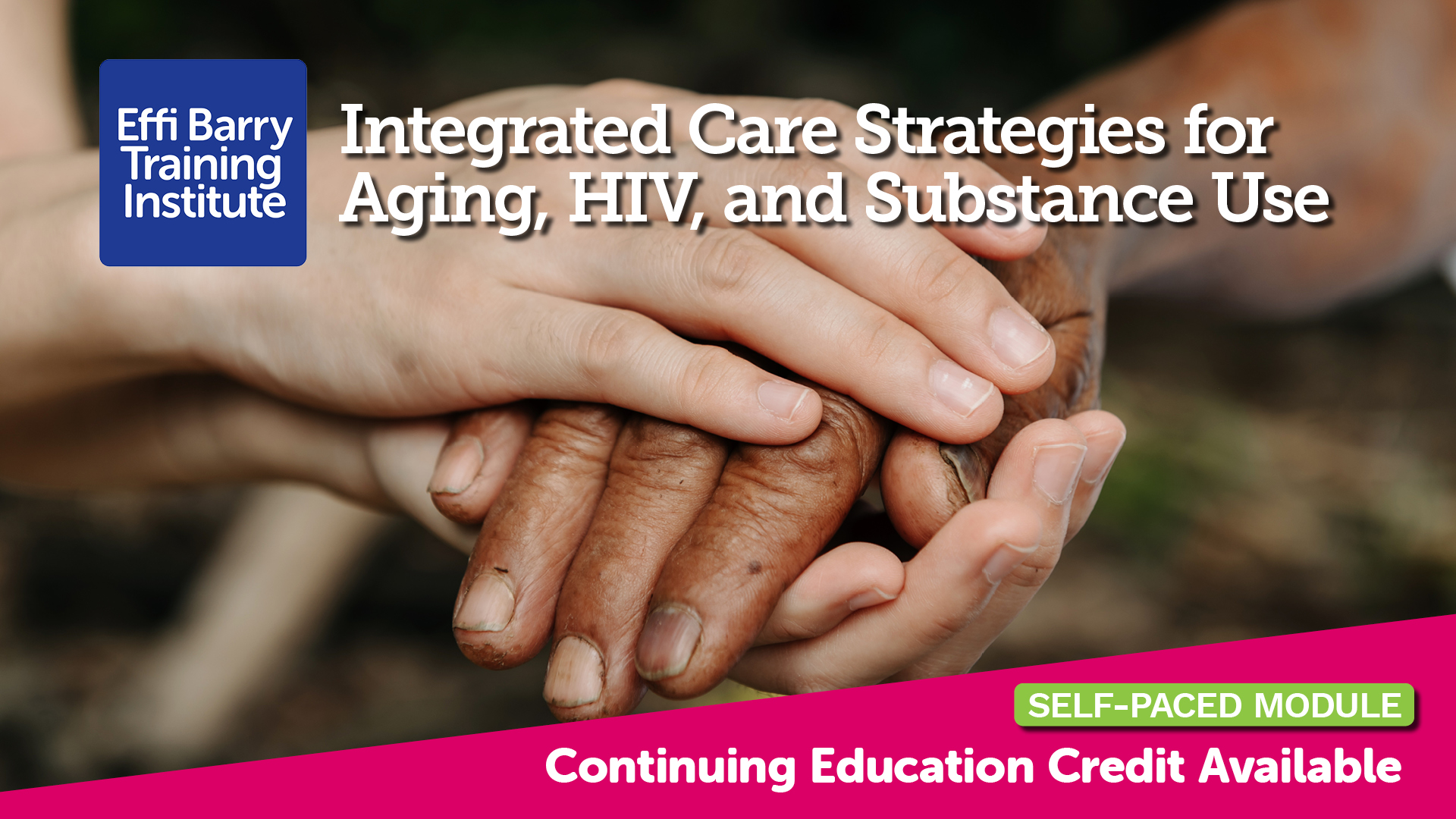
Integrated Care Strategies for Aging, HIV, and Substance Use
October 5, 2026This training examines substance use among older adults with HIV and explores how age-related physiological changes influence drug metabolism, medication interactions, and overdose risk. Participants will learn to recognize common signs of substance use in older adults, apply evidence-informed drug user health strategies that support healthy aging, and identify practical opportunities to engage aging clients in care using compassionate and person-centered care.
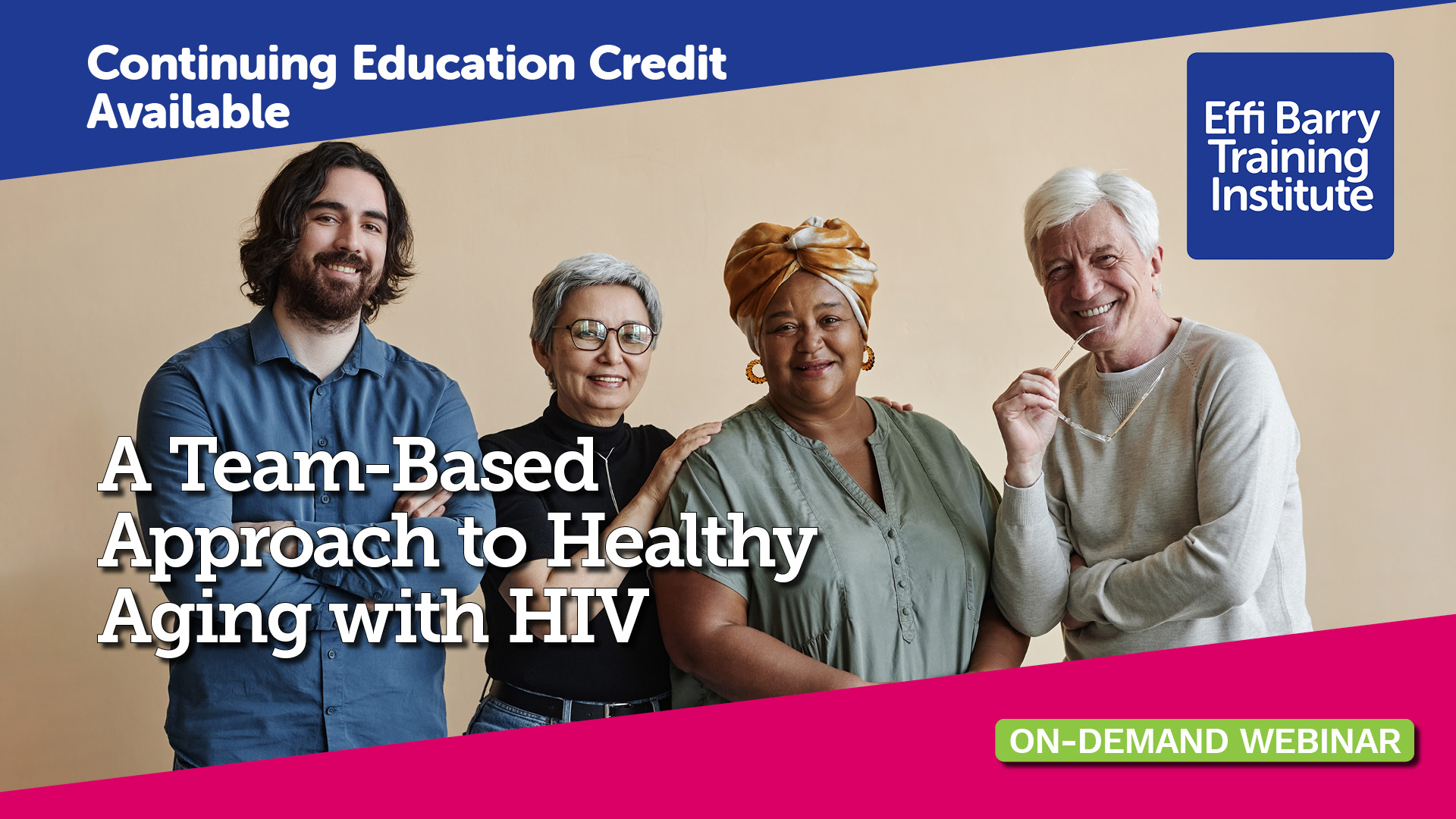
A Team-Based Approach to Healthy Aging with HIV
September 15, 2026As the population of older adults living with HIV continues to grow, coordinated, multidisciplinary care is increasingly important to address the complex medical, behavioral, and social needs of this population. This webinar will explore strategies for integrating healthcare providers, case managers, behavioral health professionals, pharmacists, peer navigators, and community-based organizations to deliver comprehensive, person-centered care.
Motivational Interviewing for Drug User Health Settings
August 20, 2026This interactive skill-building learning collaborative is designed to strengthen participants’ ability to use motivational interviewing (MI) techniques when working with people who use drugs.
Honoring Traditions, Advancing Health: Delivering Culturally Responsive HIV Prevention and Care with American Indian and Alaska Native Communities
June 29, 2026This e-learning module explores the intersection of cultural traditions and HIV prevention in Native communities. Learners will gain foundational knowledge of the historical, social, and cultural factors that influence HIV risk and access to care, as well as an overview of disparities impacting Native populations. The module highlights culturally responsive, community-led approaches to prevention, including the integration of traditional practices and the importance of trust-building.
Practical De-Escalation and Conflict Resolution Skills
This skill building learning collaborative equips healthcare providers, outreach workers, peer navigators, and other frontline staff with practical techniques for de-escalation and conflict resolution when working with people who use drugs.
Common and Emerging Adulterants
This skill-building learning collaborative provides an overview of common and emerging drug adulterants affecting the current drug supply and their implications for overdose prevention and response, including which overdose related symptoms may respond to naloxone and which may require additional medical intervention.
Beyond the Basics: Introducing the Eight Ps Framework for Inclusive and Effective Sexual History Taking
January 19, 2026Traditional sexual history models don’t fully capture today’s realities of mobility, digital connection, and borderless sexual networks. The new Eight Ps Framework builds on prior models by integrating these modern patterns alongside a more person-centered, equity-focused approach to sexual wellbeing.
Simplifying Prevention: A Deep Dive into Long Acting Injectable PrEP
January 9, 2026Providing a comprehensive overview of LAI-PrEP, this webinar will focus on identifying eligible populations and comparing the benefits and challenges of using any PrEP option. Participants will learn strategies to promote equitable access, outreach, and uptake, particularly among priority populations.
Thriving in Uncertainty: Strategies for Sustaining HIV Prevention in DC
November 21, 2025To thrive in times of uncertainty, CBOs must strengthen their organizational resilience and proactively position themselves for long-term success. This webinar will provide practical, actionable strategies to help leaders assess their organizations, identify vulnerabilities and opportunities, and chart a path toward sustainability.
The Prevention Generation: Evolving Strategies to Engage Youth
November 18, 2025The “The Prevention Generation: Evolving Strategies to Engage Youth” webinar is designed to empower professionals to take an active role in engaging youth in HIV prevention. “The Prevention Generation” will discuss innovative and effective engagement strategies, share real-world experiences from youth-focused professionals, and promote actionable steps to help keep the next generation engaged in reducing the spread of HIV.
HIV & Comorbidities: Understanding the Intersection of HIV and Other Health Conditions
September 29, 2025This webinar examines the impact of co-morbidities such as diabetes, cardiovascular disease, mental health disorders, and hepatitis on individuals living with HIV. Experts will discuss how these conditions intersect with HIV and influence treatment and health outcomes.
Collaborating with CBOs to Enhance Harm Reduction Initiatives and Close Gaps in Services
May 14, 2025This webinar will explore how community-based organizations can strengthen harm reduction efforts by working together to create a seamless network of support. By identifying service gaps and forming strategic partnerships within their immediate region, CBOs can offer a more comprehensive, wraparound approach to care—ensuring that individuals have continuous access to essential services like overdose prevention, housing support, healthcare navigation, and peer-led interventions.