

Training Library

Browse our library of HealthHIV trainings — offered in a variety of formats to a diverse audience of clinicians and allied health professionals.
In support of improving patient care, HealthHIV is jointly accredited by the Accreditation Council for Continuing Medical Education (ACCME), the Accreditation Council for Pharmacy Education (ACPE), and the American Nurses Credentialing Center (ANCC), to provide continuing education for the healthcare team. In addition to CME credit, nursing continuing professional development (NCPD) contact hours, continuing pharmacy education (CPE) contact hours, and IPCE credit, HealthHIV is able to offer ASWB credit for social workers, AAPA credit for Physician Associates and APA credit for psychologists through Joint Accreditation. HealthHIV also is accredited by the National Commission for Health Education Credentialing to award CHES®/MCHES® continuing education credits for Certified Health Education Specialists.
-
CREDIT AVAILABLE
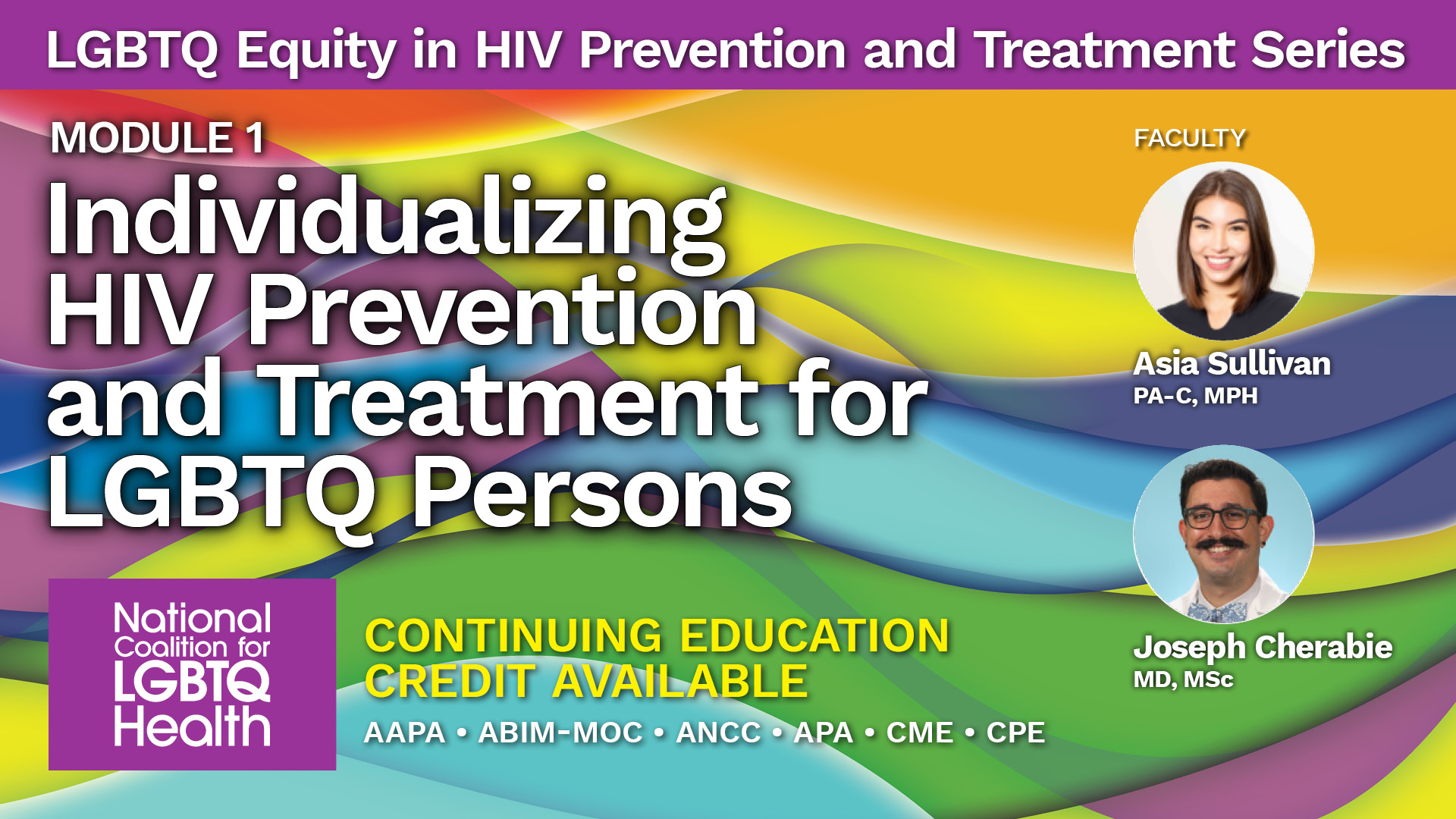
Individualizing HIV Prevention and Treatment for LGBTQ Persons
June 15, 2026
This activity provides an overview of current HIV prevention and treatment options with a focus on tailoring care to the needs and preferences of LGBTQ individuals. Participants will explore patient-centered approaches to sexual history-taking, age-specific care considerations, and integration of STI prevention strategies, including DoxyPEP, into comprehensive HIV prevention planning.
-
Ethical and Compassionate Pregnancy Care for People at Risk for Overdose
June 9, 2026
This webinar will explore compassionate, ethical ways to provide supportive care during pregnancy for people at risk for overdose, with a focus on respect, dignity, and practical approaches. Highlights on how nonjudgmental, evidence-informed approaches can promote health, informed choice, and personal autonomy for both the parent and baby will also be shared.
-
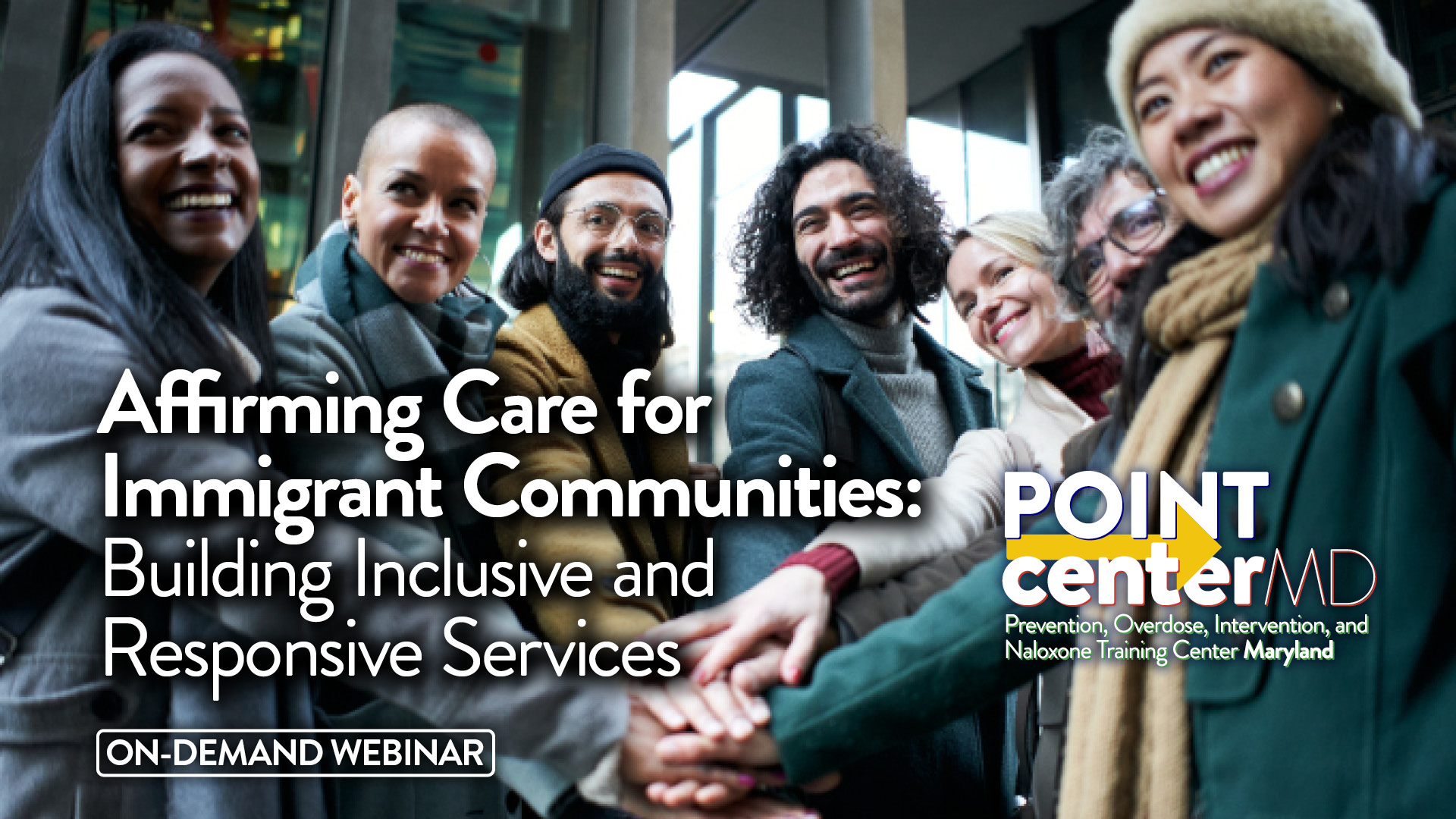
Affirming Care for Immigrant Communities: Building Inclusive and Responsive Services
June 3, 2026
This session equips participants with tools to create affirming, inclusive services for immigrant communities with a focus on respect, access, and trust across Maryland’s service systems.
-
Trauma-Informed Care: Practical Tools for the HIV Prevention Workforce
May 28, 2026
This webinar provides an overview of trauma-informed care and its application across clinical and programmatic HIV settings. Participants will explore how trauma impacts health behaviors, engagement in care, and service delivery, and will be introduced to practical, evidence-informed tools that can be integrated into everyday practice.
-

Real Talk, Real Impact: HIV Prevention and Sex Work
May 27, 2026
This webinar explores the intersection of sex work, access to healthcare, and community safety. Participants will learn practical strategies for building trust, engaging respectfully, and supporting autonomy while working to reduce stigma and create safer, more inclusive service environments.
-
CREDIT AVAILABLE
Simplify, Personalize, Suppress: Novel Oral ART for HIV Management
May 22, 2026
Given persistent unmet needs in the management of virologically suppressed HIV, this program aims to strengthen clinicians’ knowledge of resistance, safety, adherence, and drug–drug interactions of current regimens and guidance on integrating novel oral regimens in development into individualized, guideline-based care. In this activity, an expert in infectious diseases discusses novel oral antiretroviral therapy (ART) for the management of human immunodeficiency virus (HIV).
-
Sex Work, Health, and Safety: Building Trust Through Community Engagement
May 21, 2026
This webinar will focus on the intersection of sex work, health access, and community safety. Participants will explore trust-building strategies and engagement approaches that support autonomy, reduce stigma, and promote safer service environments.
-

Insights from HealthHIV’s Fifth Annual State of Aging with HIV™ National Survey
May 6, 2026
Findings from the recently-fielded HealthHIV State of Aging with HIV™ Fifth Annual National Survey were presented during this webinar on Wednesday, May 6, 2026.
-
Creating Stigma-Free Services: Community-Based Settings
April 28, 2026
Designed for outreach and community-based staff, this training explores how stigma shows up in everyday interactions and offers practical tools to foster welcoming, respectful environments that support engagement and retention.
-
Ketamine and Psychedelic Substances in Practice: What Providers and Communities Need to Know
April 16, 2026
This advanced session explores the evolving landscape of ketamine and other psychedelic substances as they appear in clinical settings, community conversations, and personal use. Participants will examine current evidence, emerging models of care, ethical considerations, and how providers can engage in informed, nonjudgmental conversations while navigating Maryland’s legal and clinical context.
-
Creating Stigma-Free Services: Clinical Settings
April 15, 2026
This session focuses on reducing stigma in clinical settings serving people at risk of overdose, with an emphasis on improving patient experience, strengthening provider communication, and implementing systems-level changes that enhance engagement, retention in care, and overall health outcomes across Maryland.
-

CREDIT AVAILABLE
Targeting Viral Hepatitis: A Road Map for Providers
March 20, 2026
Medscape Education, in partnership with HealthHIV and HealthHCV, is pleased to announce the release of an education curriculum featuring expert perspectives on the prevention and management of viral hepatitis.