
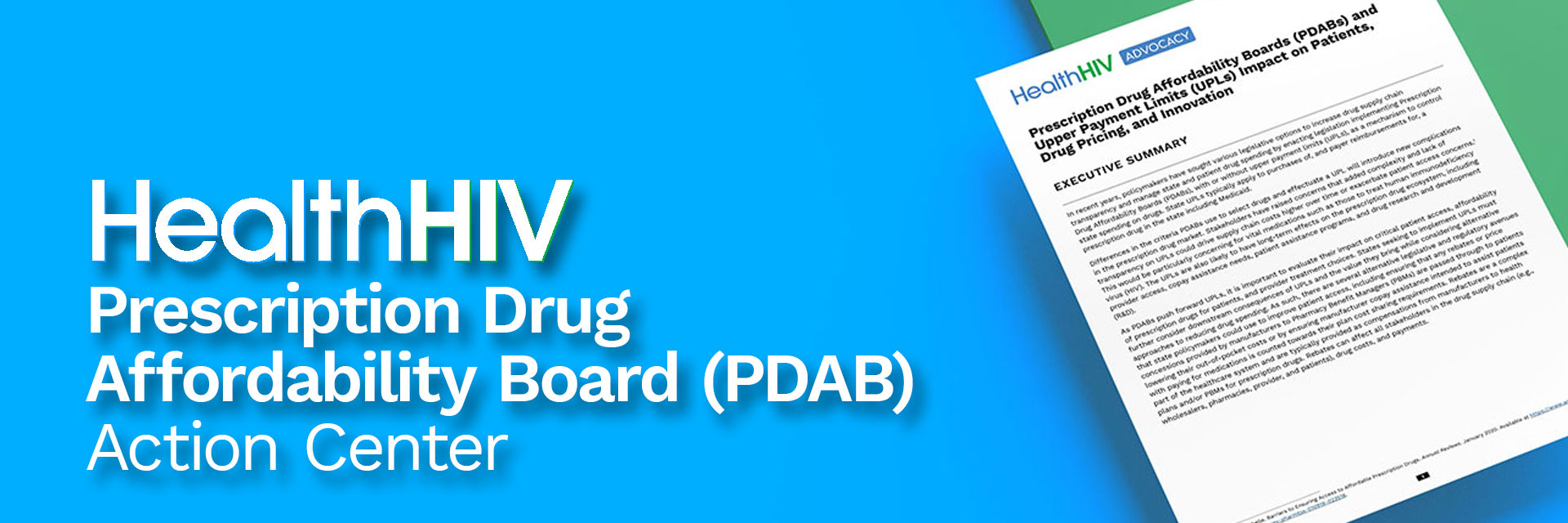
With PDABs becoming increasingly advanced throughout the country, HealthHIV is advocating for the crucial needs of patients amid rapid policy change and critical conversations happening on this subject.
The Action Center helps:
- Protect access to lifesaving medications.
- Push forward and uplift initiatives to ensure equitable medication uptake.
- Preserve critical public health efforts.
- Promote the patient voice in all healthcare policy discussions.
Take Action in Your State
Prescription Drug Affordability Boards can influence how states evaluate drug costs, set affordability policies, and determine which treatments receive additional scrutiny. This Action Center helps patients, providers, and advocates understand those decisions and participate in the process.
Access your state’s information below, and contribute via one of the following ways:
- Learning more about PDABs via this page’s resources.
- Joining PDAB or PDAB Advisory Group meetings.
- Submitting written or oral testimony.
- Commenting during rulemaking and affordability reviews.
- Contacting board members, agency officials, and state legislators.
- Sharing patient and provider experiences with treatment access.
-

Colorado
-

Maine
-

Maryland
-

Massachusetts
-

Minnesota
-

New Hampshire
-

New Jersey
-

New York
-

Oregon
-

Washington
Common Themes and Actions
- Differing Engagement and Transparency: All these states are showing varying levels of commitment to engaging with stakeholders, particularly patients, to ensure that the policies developed are reflective of community needs and real-world impacts.
- Ongoing Legislative Adjustments and Challenges: Each state is at a different stage in their legislative deliberations concerning drug affordability and any potential operational changes to PDABs.
- Increasing Patient-Centric Focus: There’s a clear trend towards ensuring that any drug pricing or affordability measures consider the unique needs and circumstances of patients, aiming to prevent negative impacts on access to necessary treatments.
Key Takeaways for Strategy and Coalition Principles
- Engagement Necessity: State experiences highlight the necessity of engaging more effectively with the public and especially with patients to ensure that the PDAB processes are inclusive and reflect real-world impacts and concerns.
- Transparency and Education: There is a significant need for transparent processes and educational outreach to ensure that stakeholders, particularly patients, understand what UPLs entail and how they might affect access to necessary medications.
Related Health Policy Resources
PDABs are part of the broader national and state-level drug affordability landscape.
These resources address related health policies and decisions that can affect care, coverage, cost, and access.
Browse All Resources-
Joint Statement and Public Comments on the Proposed Changes to Connecticut’s Medicaid Protected Drug Classes
ADAP Advocacy and HealthHIV issued the following joint statement in response to the proposed changes to services for People Living with HIV/AIDS (PLWHA) under Medicaid as set forth in the Connecticut Governor’s Health and Human Services budget recommendations.