

Funding Cuts, Service Disruptions, and Workforce Strain Threaten to Undo Three Decades of Progress on HIV Prevention and Treatment, According to HealthHIV’s State of HIV Prevention and Care™ Eighth Annual National Survey
Three in four providers lost or saw delays in HIV funding in the past year, with housing, transportation, and community outreach services cut first.
FOR IMMEDIATE RELEASE • October 21, 2026
Washington, D.C. ~ Funding cuts, service disruptions, and workforce strain threaten to undermine HIV prevention and care, undoing three decades of progress, according to the HealthHIV State of HIV Prevention and Care™ Annual National Survey Report released today. For the first time, this year’s national survey engaged not only HIV clinical and service providers but also people with HIV and PrEP users (current, previous, or prospective) in providing feedback on the state of HIV care.
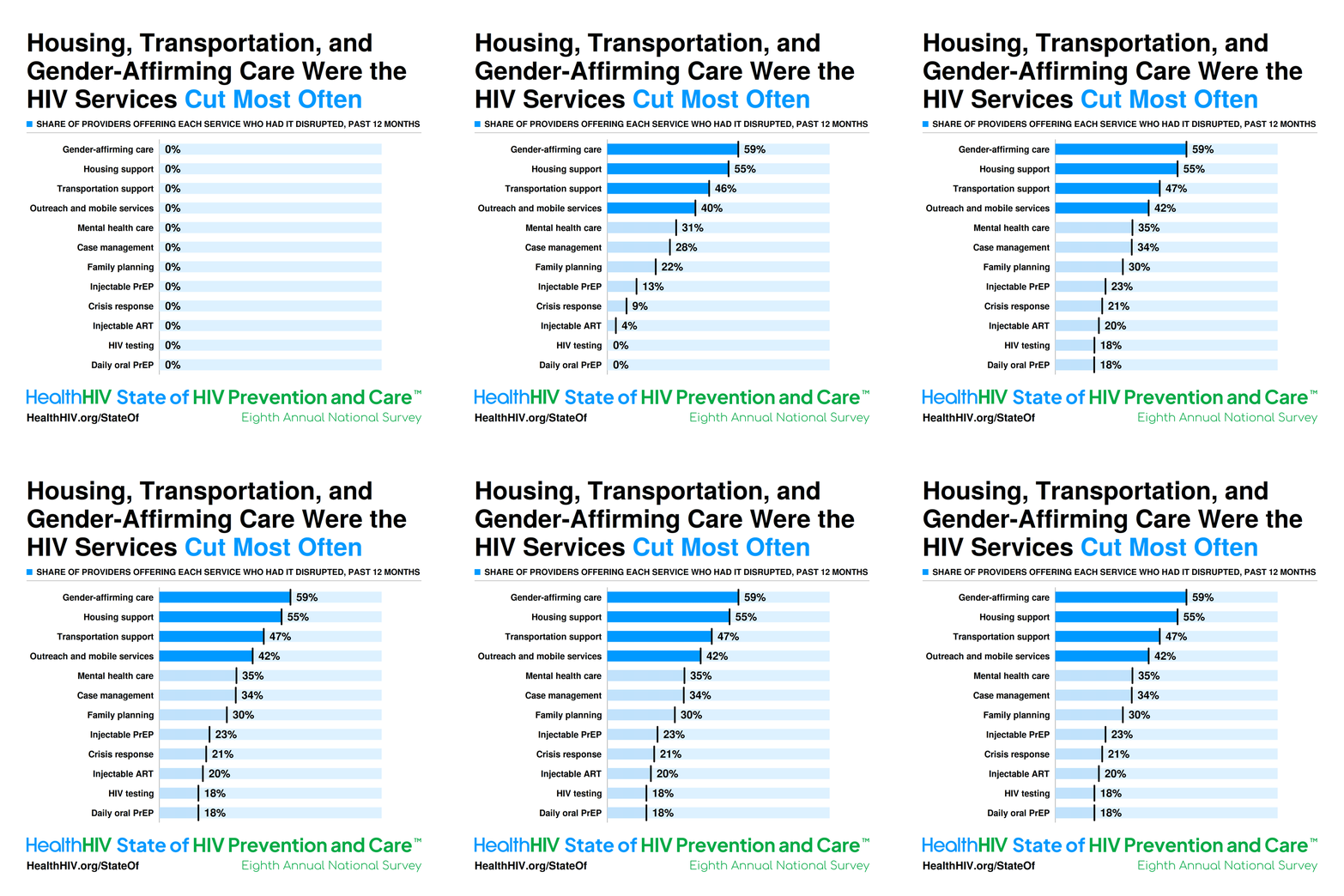
Over four in five providers (84%) indicate that policy changes since January 2025 have affected their ability to provide or sustain services, while people with HIV and PrEP users believe that ongoing cuts to services have undermined their access to prevention and care, including transportation, housing support, telehealth, and community outreach.
The survey covered six domains, with findings detailed in the expansive State of HIV Prevention and Care National Survey Report:
- HIV Prevention covered PrEP awareness, access, and cost among current, previous, and prospective users; long-acting options, including injectable lenacapavir; and viral suppression among people in care.
- HIV Treatment and Comorbidities examined rapid ART start, single-tablet regimens, polypharmacy, retention and adherence, co-infection screening, vaccines, and primary care.
- Behavioral Health focused on everyday discrimination, HIV and PrEP stigma, mental health and stress, and legal and law-enforcement worries that deter testing and care.
- Access addressed coverage and cost across private insurance, RWHAP/ADAP, Medicare, and Medicaid; income-linked gaps; care coordination; and telehealth.
- Workforce examined burnout and emotional exhaustion, threats and harassment, training needs, and intent to stay in the field.
- Service Delivery details the services being provided and how they are being impacted by funding disruptions.
Funding Disruptions Threaten the Health of People with HIV: Three in Four Providers Report Lost Funding; People with HIV Report Lost Coverage, Delayed Care, and Higher Viral Loads
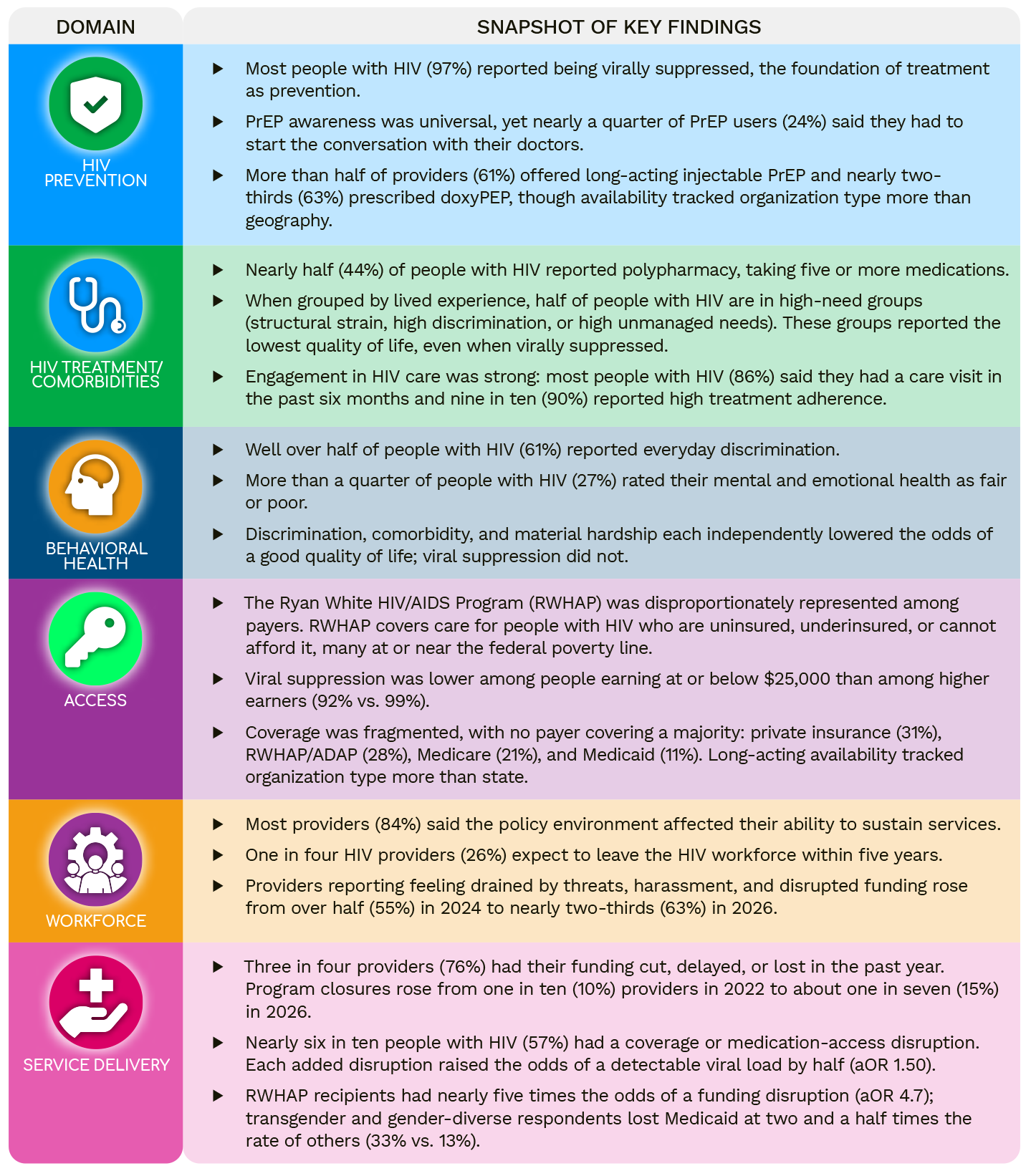
The last 12 months brought deeper cuts to HIV prevention and care services than the pandemic. Over three-fourths of providers reported funding cuts, delays, or losses, regardless of funding source; program closures rose from 10% in 2022 to 15% in 2026, and service reductions from 18% to 29%. RWHAP-funded organizations were hit hardest: 83% reported a funding disruption, compared with 58% of organizations without RWHAP funding. As one provider said, “HIV care has progressed greatly, but with funding reductions I fear our program may close.”
Funding cuts impacted the health and well-being of people with HIV. While viral suppression among survey respondents with HIV was above the national average (97% vs. 69%), it was lower among those experiencing financial constraints, including those earning $25,000 or less. Half of people with HIV said they experienced stress over housing costs in the past year, and more than a third were food insecure.
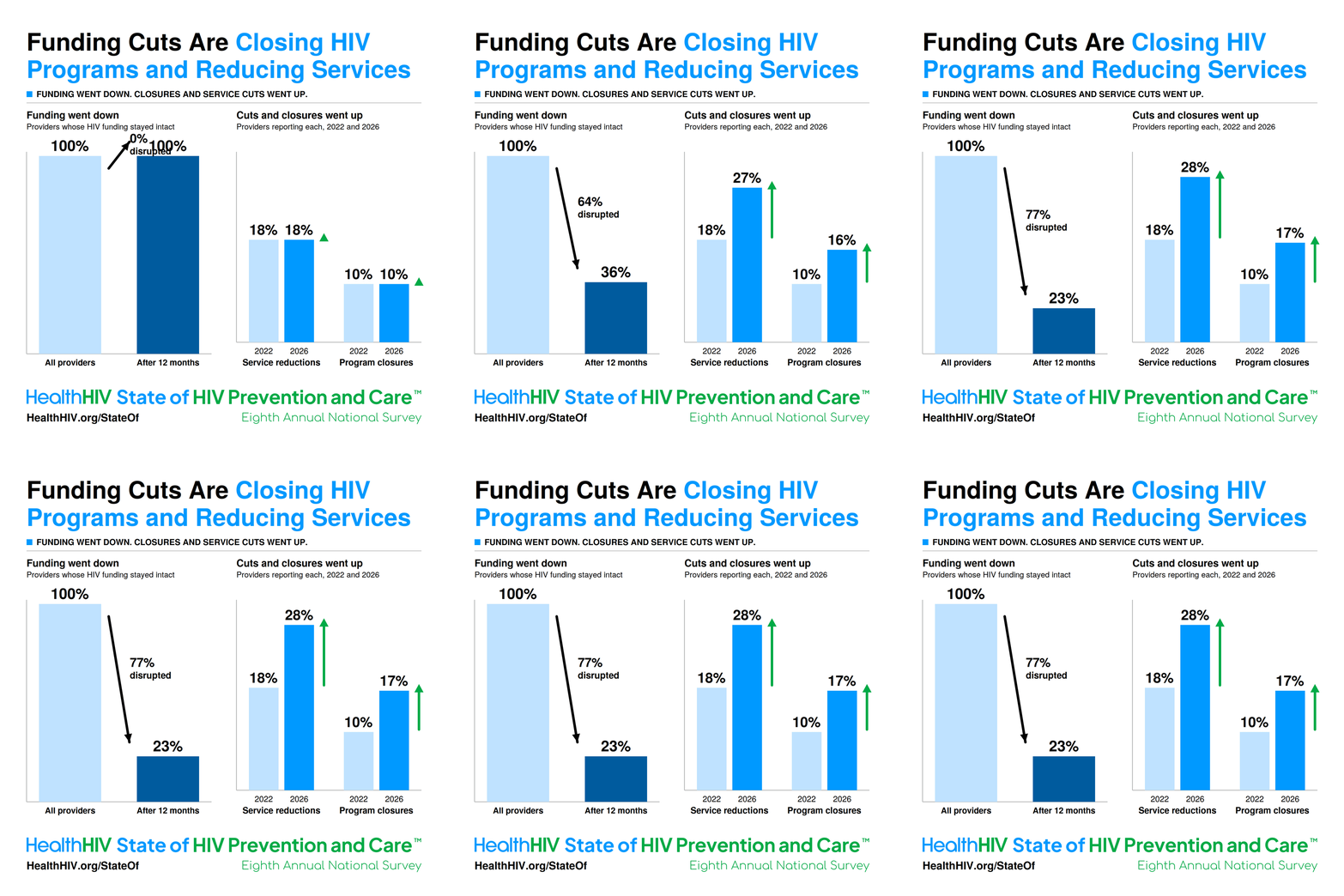
These factors were compounded among people aging with HIV; more than half engaged in polypharmacy (taking five or more medications daily) (52%), and experienced higher rates of discrimination and lower quality of life than their younger counterparts. One in five people with HIV who had Medicaid lost that coverage within the past two years, while each added disruption in care increased their odds of a detectable viral load (15% of people with HIV with no disruption in care had a detectable viral load vs. 47% of people with HIV who experienced four or more disruptions).
The gaps widen among populations that historically have been disproportionately impacted by HIV. PrEP users and people with HIV in rural areas are less likely to have access to novel prevention and treatment options: urban providers report offering injectable ART at about three times the rate of their rural counterparts (79% vs. 27%) and injectable PrEP at nearly twice the rate (71% vs. 44%). Over half of Black PrEP users (56%) lost work in the past year, nearly three times the rate of white respondents. Transgender and gender-diverse respondents lost Medicaid at two and a half times the rate of others (33% vs. 13%), and three in four transgender and gender-diverse PrEP users reported deadnaming, misgendering, or misrecording in medical, insurance, and pharmacy records, which discourage engagement and continuation of PrEP. Half of PrEP users (52%) had PrEP-related care delayed by an insurance decision.
The Political Climate Increasingly Stresses People with HIV, Deterring Testing, PrEP, and Care
More than half of people with HIV (61%) reported experiencing everyday discrimination, while one in four rated their mental health as fair or poor, which was heavily associated with lowered quality of life, multiple comorbidities, and material hardship. Women and transgender or gender-diverse respondents with HIV were disproportionately impacted. As one person with HIV noted, along with medical stigma, they are constantly dealing with “legally deployed physical, emotional, spiritual, and vocational stigma.” Nearly half of people with HIV (46%) and a third of PrEP users (32%) said political or social change had increased their stress, while nearly half of PrEP users (47%) said legal or law-enforcement concerns affected whether they sought PrEP, HIV testing, harm reduction, or sexual-health services.
“Viral suppression and engagement in HIV care look strong among our survey respondents, but we are more than the sum of our viral loads,” says Scott D. Bertani, HealthHIV Director of Advocacy and a long-term survivor. “We’re hearing providers and people with HIV describing funding disruptions, coverage losses, reduced support services, workforce strain, and broader health and quality-of-life challenges. We shouldn’t wait for those pressures to show up in clinical markers or people falling out of care before addressing them through better federal and state policy that supports the local systems of care where people experience them.”
The First Services Cut Are the Ones That Get Patients Through the Door
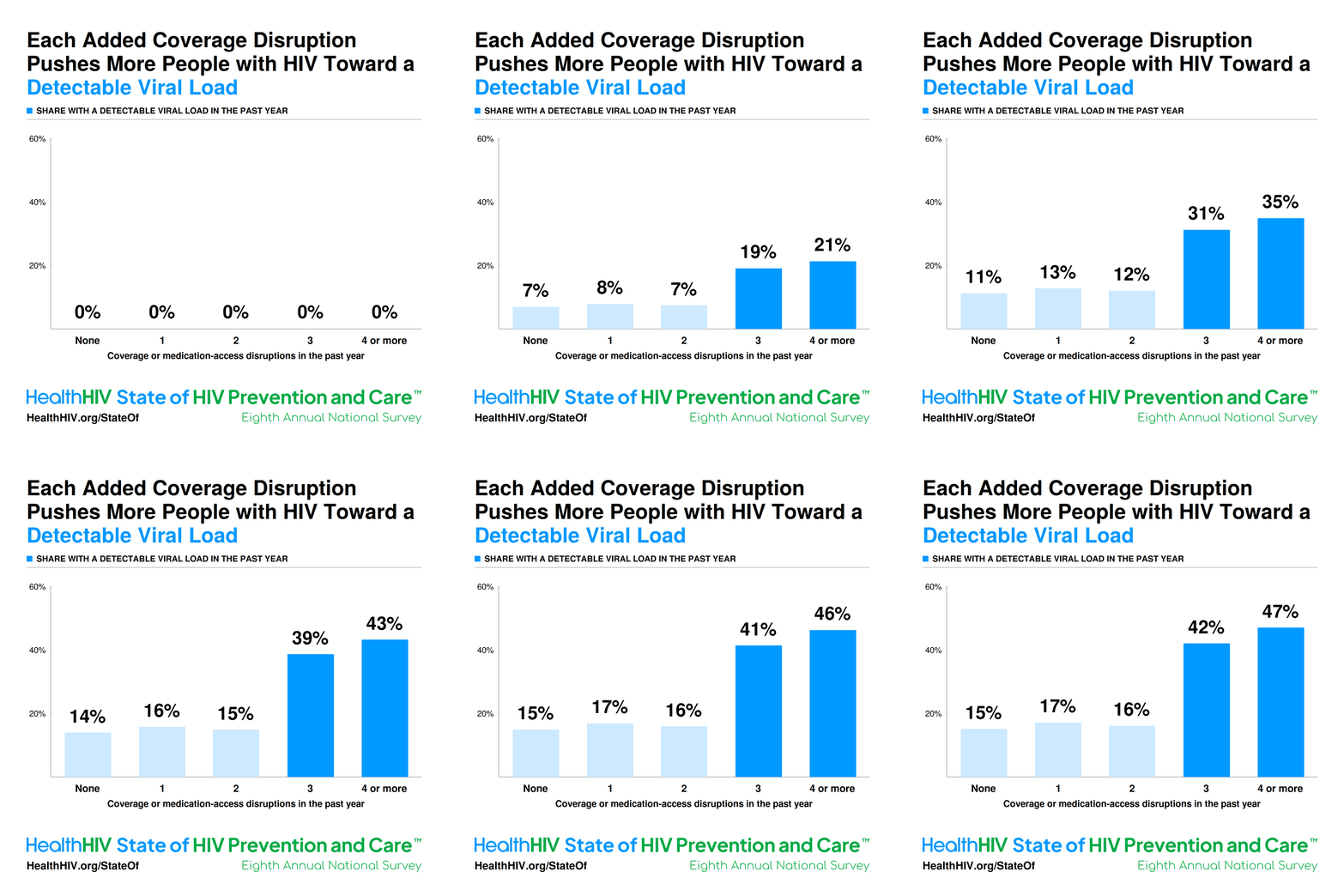
Providers reported that funding disruptions had hampered their ability to deliver clinical and behavioral care, while nearly six in ten people with HIV (57%) reported at least one coverage or medication-access disruption in the past year. Many services affected by sudden funding changes are those that keep people with HIV and PrEP users in care: gender-affirming care (59%), housing support (55%), transportation support (47%), and community outreach and mobile services (42%). As one provider said, “It is hard to provide care and combat stigma for people that our nation is marginalizing … the people that need these services most.”
Priorities for Action Focus on Stabilizing Funding for Providers and Patients
The report sets out nine priorities for action. Three address financing: protect and stabilize the Ryan White HIV/AIDS Program, ADAP, and Medicaid, the financing behind viral suppression; make Medicaid continuity an HIV priority, with ex parte renewals, continuous eligibility, and navigation for the paperwork that drives losses; and cut prior-authorization and formulary friction for ART and PrEP, and protect ADAP formularies. Three address services: pay community and safety-net organizations to offer long-acting options, so that access does not depend on which clinic a patient reaches; fund care coordination, transportation, and housing as core care services; and protect telehealth flexibility and the integration of HIV into primary care. Three address people: make mental-health screening and anti-discrimination practice routine, and treat quality of life as a core outcome; invest in workforce retention, funding and insurance-navigation training, and protection from threats; and confront the policy and social conditions tied to greater stress and less willingness to seek testing and care.
Over a Quarter of HIV Providers Plan to Leave the Workforce in Five Years
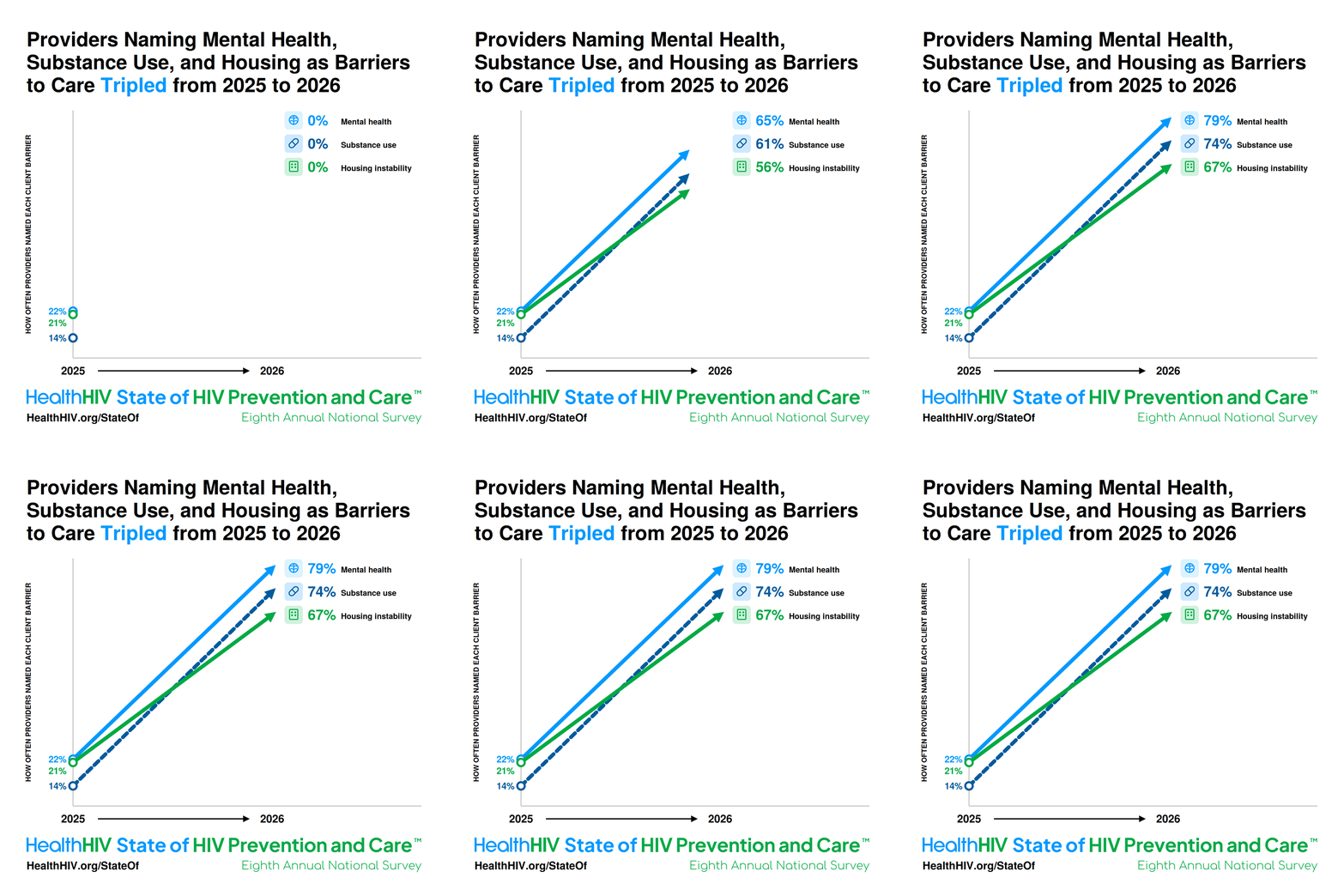
Changes in federal policies have impacted behavioral health provision hardest: more than four in five providers (84%) said the policy environment has affected the services they can offer, and over one-fourth (26%) planned to leave the HIV workforce. Emotional exhaustion at least monthly rose from 55% in 2024 to 63% in 2026; those providers had 3.6 times the odds of leaving the HIV workforce within five years. Providers under age 40 were 2.8 times more likely to report that their organization faced threats, harassment, or safety concerns. Providers naming mental health, substance use, and housing as barriers increased roughly three-fold from 2025 to 2026.
“What shapes the lives of those delivering and accessing HIV prevention and care services extends well beyond the clinical,” says HealthHIV Senior Director of Research and Evaluation Dr. Circe Gray Le Compte. “The HIV workforce was overwhelmed and shrinking before now. Funding threats and disruptions have taken a toll on providers, especially younger providers. People with HIV and PrEP users, in turn, face barriers to care that many HIV providers cannot address due to funding cuts.”
An Overall Positive Outlook, Despite the Challenges Beneath the Surface
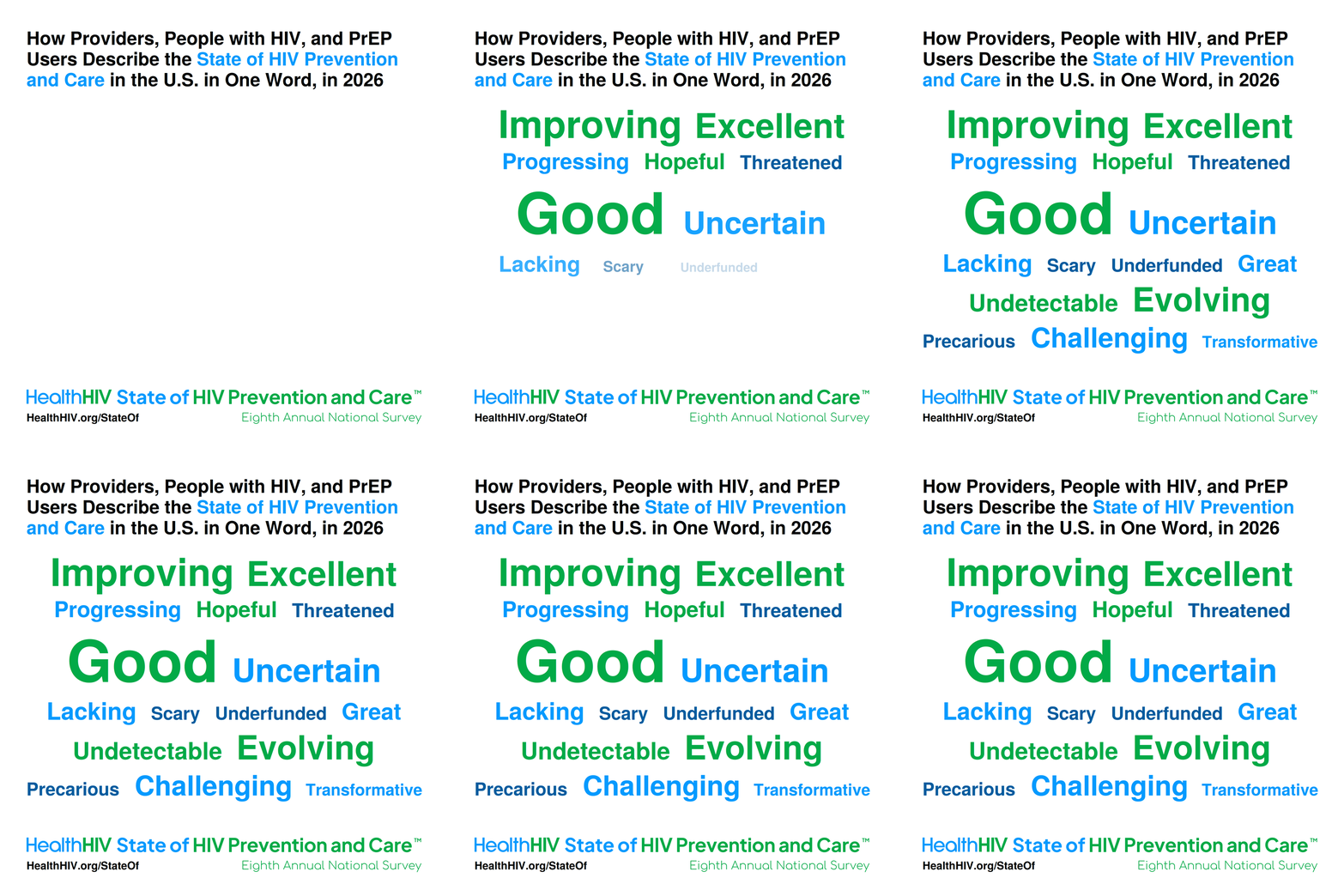
Asked to describe the state of HIV care in one word, respondents most often said good, improving, and excellent, alongside uncertain, lacking, and threatened. The optimism reflects what treatment and prevention can do when people can reach them; the concern reflects what respondents see happening to the funding, services, and workforce that make that reach possible.
Alignment with the HealthHIV State of Aging with HIV™ National Survey Findings
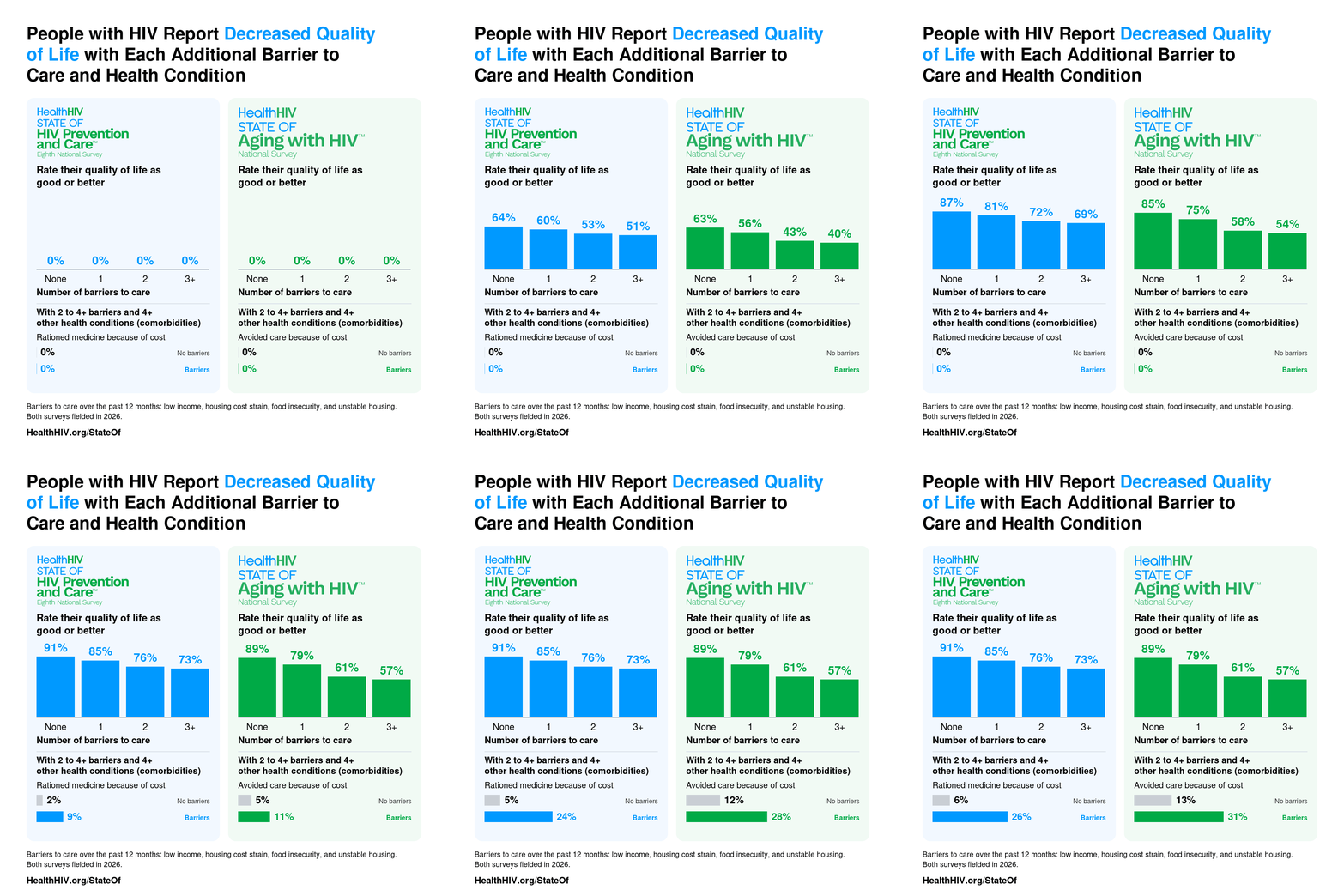
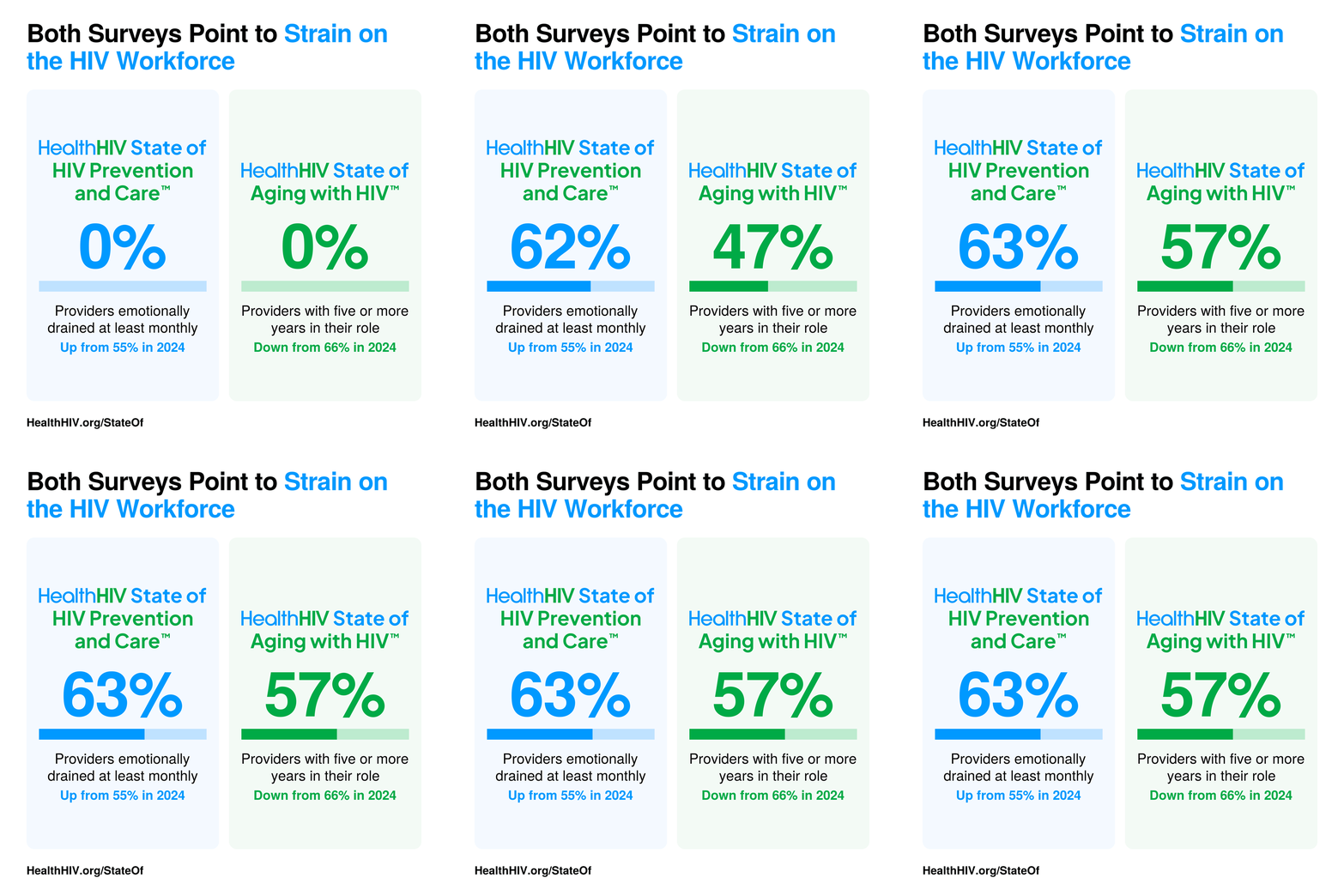
Findings from the HealthHIV State of HIV Prevention and Care™ National Survey align with the HealthHIV State of Aging with HIV™ Fifth Annual National Survey report, released in May 2026, which reached people aging with HIV (people with HIV ages 50 and older, and/or living with HIV for 15 or more years; N=365) and the providers who serve them (N=341), with findings framed across five domains (HIV and Geriatric Care, Comorbidities, Behavioral Health, Access and Payment, and Workforce). In both surveys, the percentage of people with HIV reporting a good or better quality of life decreased with each additional comorbidity and barrier to care (low income, housing cost strain, food insecurity, and unstable housing). They were also more likely to ration medicine or avoid care because of cost. Both surveys also point to workforce strain: in the HIV Prevention and Care survey, providers feeling emotionally drained at least monthly rose from 55% in 2024 to 63% in 2026, while in the aging survey the share of providers with five or more years in their role fell from 66% to 57%.
About the HealthHIV State of HIV Prevention and Care™ National Survey
HealthHIV fielded the survey through REDCap from May to July 2026, reaching 1,214 people across 47 states and territories. A single feeder question routed 1,207 of them to one of three instruments: 627 providers who deliver HIV prevention or treatment services, half in clinical roles (physicians, nurse practitioners, nurses, pharmacists) and half in non-clinical roles (case managers, navigators, community health workers, outreach workers); 461 people with HIV, with a median of 24 years since diagnosis; and 119 current, previous, and prospective PrEP users. Provider surveys have been fielded since 2009; the people with HIV and PrEP user instruments were fielded for the first time within the survey in 2026. Findings are framed across six domains (HIV Prevention, HIV Treatment and Comorbidities, Behavioral Health, Access, Workforce, and the new Service Delivery domain on funding disruption) and reported through question-level prevalence estimates, comparisons across the three respondent groups, multivariable regression, mediation analysis, and provider trends since 2009. The full report, including methods and a complete set of question-level responses, is available at HealthHIV.org/stateof/hivcare.
About HealthHIV “State Of” Surveys
HealthHIV Research and Evaluation conducts regular national surveys to better inform ongoing advocacy, education, research, and training activities. These “State Of” surveys provide unique insights into patient and provider issues to optimize primary and support services for diverse communities. The regular reports provide multi-year trend analyses that show changes, challenges, and opportunities to address providers’ and patients’ needs. HealthHIV, HealthHCV, and the National Coalition for LGBTQ Health conduct “State Of” surveys addressing HIV prevention and care, HCV care, drug user health, ASOs/CBOs, LGBTQ health, and aging with HIV. Learn more at HealthHIV.org/stateof.
About HealthHIV
HealthHIV is a national non-profit working with organizations, communities, and health care providers to advance effective prevention, care, and support in HIV, HCV, STI, drug user and LGBTQ health through medical and consumer education, training, technical assistance, capacity building, advocacy, and health services research and evaluation. HealthHIV leads the HealthHCV initiative, the National Center for Health Care Capacity Building, and the National Coalition for LGBTQ Health. Learn more at HealthHIV.org and HealthLGBTQ.org.

About HealthHIV
HealthHIV is a national non-profit working with organizations, communities, and health care providers to advance effective prevention, care, and support for people living with, or at risk for, HIV and HCV through education and training, technical assistance and capacity building, advocacy, and health services research and evaluation. HealthHIV leads the HealthHCV initiative, the National Center for Health Care Capacity Building, and the National Coalition for LGBTQ Health. Visit HealthHIV.org for more information.

