
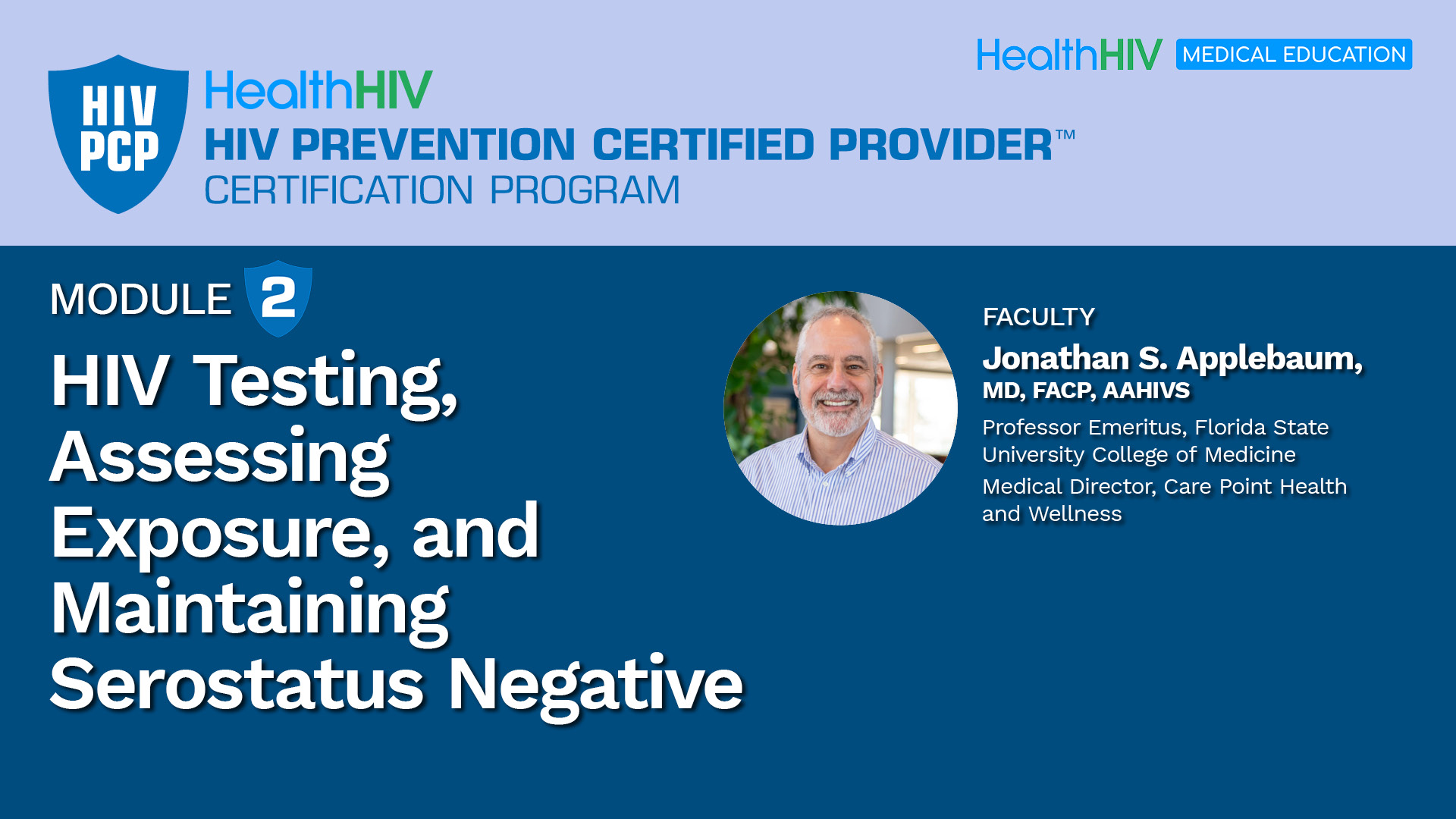
HIVPCP Module 2 | HIV Testing, Assessing Exposure, and Maintaining Serostatus Negative
April 2, 2025Module 2 of the HealthHIV HIV Prevention Certified Provider Certification Program. This course provides information on screening and diagnosing HIV, risk identification, short behavioral interventions, a status-neutral care approach for HIV services, and the importance of sexually transmitted infection screening and HIV treatment.
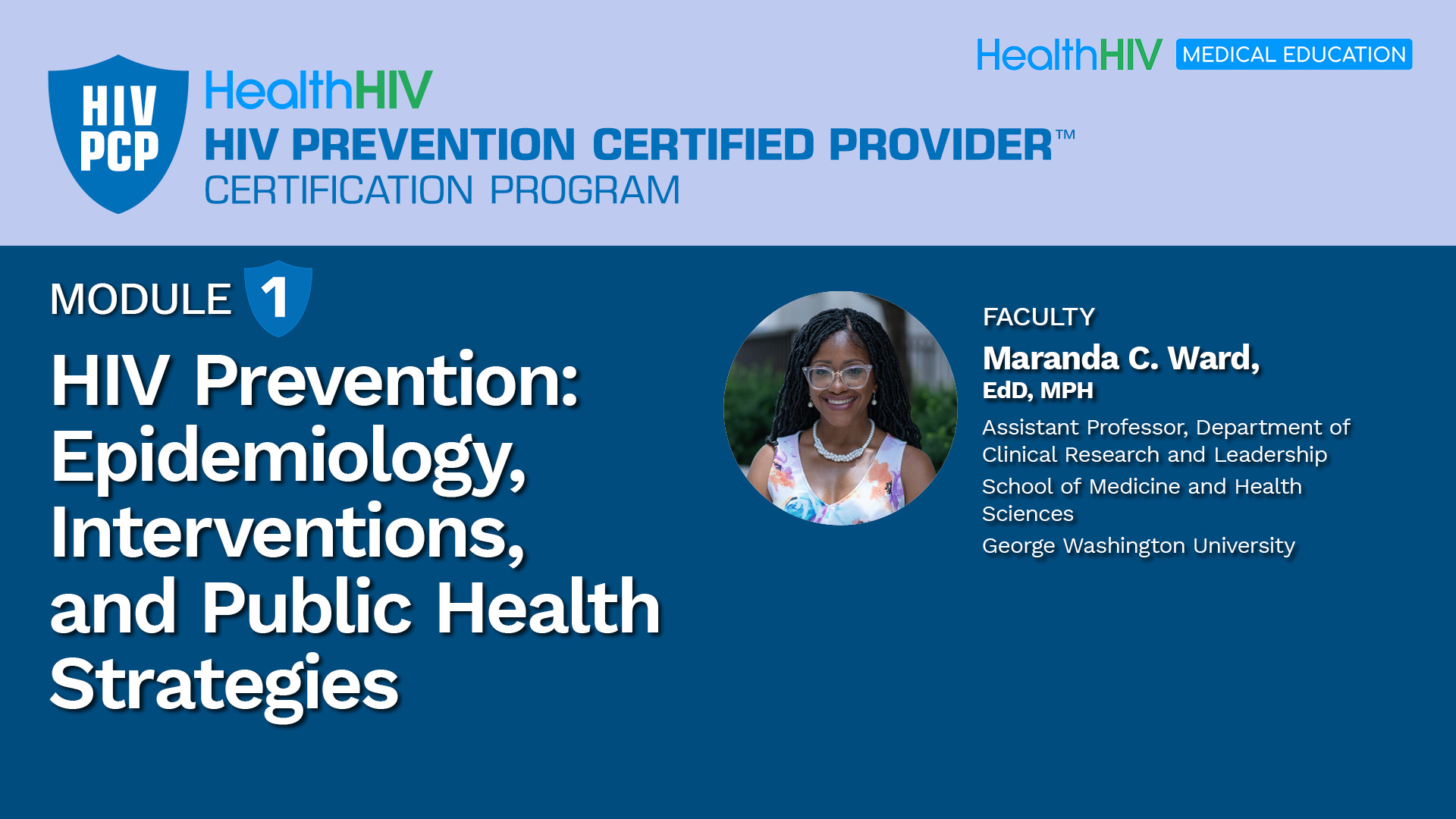
HIVPCP Module 1 | HIV Prevention: Epidemiology, Interventions, and Public Health Strategies
Module 1 of the HealthHIV HIV Prevention Certified Provider Certification Program. This course provides an overview on HIV in the U.S., touching on history, disparities, policies, and public health strategies, while emphasizing the importance of the HIV Prevention certification.
Transforming Pleasure and Wellness: Party Culture and Harm Reduction
April 1, 2025This panel discussion explores the intersection of pleasure, party culture, and harm reduction. Panelists will share insights on fostering wellness, promoting safety, and addressing substance use in social settings, emphasizing inclusive, judgment-free strategies to support informed and empowered choices.
Grace in Action: Faith-Led Harm Reduction Strategies
This session explores the role of faith communities in advancing harm reduction principles. It highlights compassionate, inclusive approaches rooted in faith-based values to support individuals on their journey toward healing and wellness, fostering trust, dignity, and meaningful engagement within spiritual contexts.
Engaging and Healing: A Trauma Informed Approach
This session provides an in-depth exploration of trauma-informed care, emphasizing the importance of recognizing trauma’s pervasive impact and integrating responsive practices. Participants will gain insights into fostering trust, promoting safety, and empowering individuals through culturally sensitive, evidence-based approaches that prioritize healing and resilience.
Shifting Perspectives: The Dynamics of Bias in Individuals and Systems
February 12, 2025In this course, participants will embark on a journey to uncover the layers of bias that exist within individuals and systems, going beyond surface-level observations to understand the underlying mechanisms at play.
Re-Envisioning Sexual History Taking
January 22, 2025This self-paced learning module will focus on the application of the 6 P’s of sexual history taking, identify strategies to overcome barriers to comprehensive history gathering, and emphasize the importance of cultural awareness and humility in ensuring an inclusive approach for all patients.
The HIV-STI Nexus: Exploring the Hidden Connection
December 17, 2024The HIV-STI Nexus: Exploring the Hidden Connection session addresses how STIs can increase susceptibility to HIV and vice versa, making comprehensive screening essential for effective prevention and treatment. Experts will discuss the latest research on co-infection risks, the impact on patient health, and best practices for integrated screening and care.
Breaking Barriers: Empowering Black Women and Girls in Health and Wellness
November 19, 2024In this on-demand Virtual Town Hall from the Empower Program, recorded during the International Conference on Stigma, experts provide valuable insights on mental health, reproductive health, sexual health, and access to equitable healthcare services for Black women and girls.

The Heart of the Matter: Cardiovascular Health in People Living with HIV
November 7, 2024This webinar will provide a comprehensive overview of cardiovascular disease (CVD) risk among people living with HIV and the underlying factors contributing to this risk. Participants will learn about current risk prediction tools available for assessing CVD risk in people living with HIV, as well as the findings and implications of the REPRIEVE trial.
Managing Diabetes and HIV in the DMV: An Integrated Approach for Healthcare Providers
November 6, 2024Designed for healthcare professionals in the DMV (District of Columbia, Maryland, and Virginia), this one-hour session will provide key insights into preventive strategies and management techniques for patients living with both conditions.
Strategies for HIV Testing and Linkage to Care for People Experiencing Homelessness (PEH)
September 18, 2024This webinar will discuss the critical challenges and strategies involved in screening, diagnosing, and linking people experiencing homelessness to appropriate HIV care.