
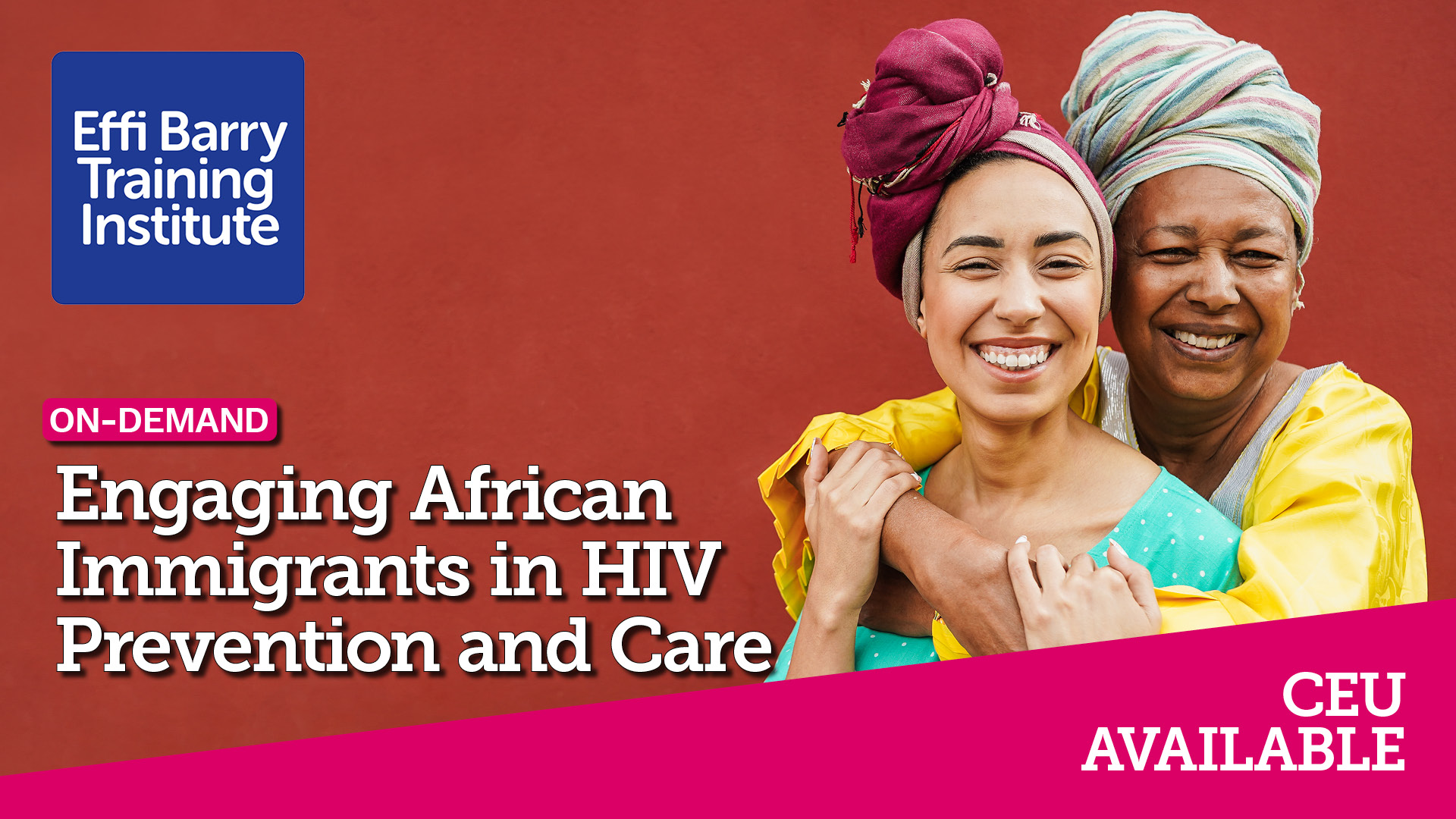
Engaging African Immigrants in HIV Prevention and Care
July 24, 2025Engaging African Immigrants in HIV Prevention and Care is a self-paced e-learning course designed to equip healthcare and service providers with culturally responsive strategies to improve HIV prevention, testing, and care engagement among African immigrant communities.
Faith in Action: Alternative Harm Reduction Strategies for Youth
April 29, 2025Join us for an insightful and transformative presentation as we explore the intersection of faith, community support, and youth well-being. In this panel discussion, we will examine alternative harm reduction strategies for addressing substance use, mental health challenges, and risky behaviors among young people in our congregational settings.
Grace in Action: Faith-Led Harm Reduction Strategies
April 1, 2025This session explores the role of faith communities in advancing harm reduction principles. It highlights compassionate, inclusive approaches rooted in faith-based values to support individuals on their journey toward healing and wellness, fostering trust, dignity, and meaningful engagement within spiritual contexts.
Breaking Barriers: Empowering Black Women and Girls in Health and Wellness
November 19, 2024In this on-demand Virtual Town Hall from the Empower Program, recorded during the International Conference on Stigma, experts provide valuable insights on mental health, reproductive health, sexual health, and access to equitable healthcare services for Black women and girls.
Harmony in Healing: Uniting Faith and Harm Reduction Practices
September 19, 2023This webinar will cover key aspects of faith-based communities’ involvement in harm reduction. These include non-judgmental approach, sense of belonging and support, moral and ethical guidance, integrated approach, outreach and awareness, stigma reduction, partnerships with healthcare services, prevention programs, and spiritual healing and transformation.